




The Formula 1 Spanish Grand Prix showcases itself to the world with a record-breaking debut


MADRING closes its first edition with 352,618 attendances and a mobility model in which eight out of ten fans arrived by public transport, avoiding the mass use of private vehicles and large crowds.
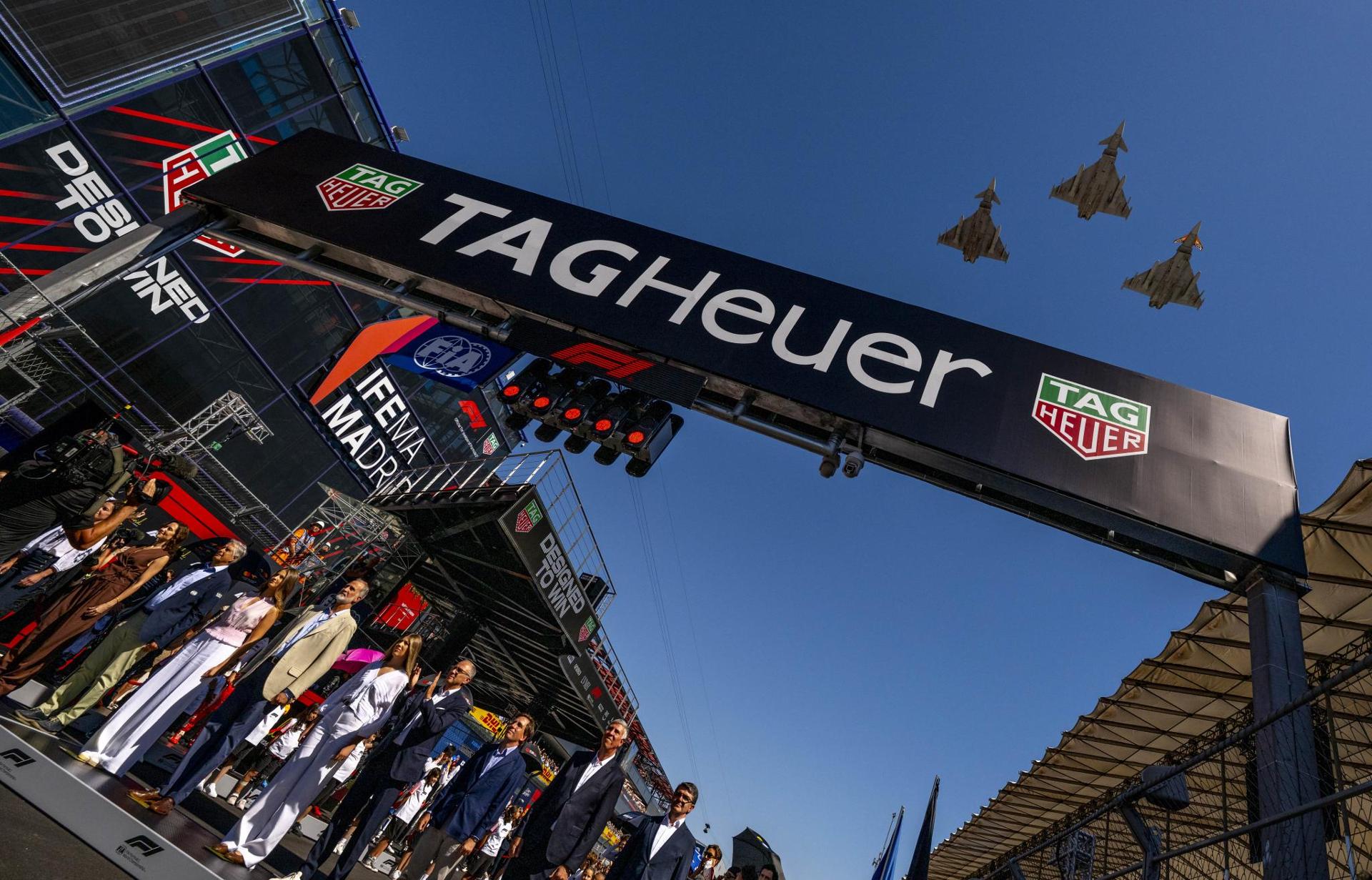
MADRING has burst onto the Formula 1 calendar with a debut that has taken Madrid's image far beyond its 5.4 kilometres of track. Four days and 352,618 cumulative attendances, a massive public transport response, television leadership and an international conversation that placed the new Spanish Grand Prix in Formula 1's global shop window.
Alongside the figures came an enormous drawing power. The Royal Family and some of the most recognised names in sport, music, cinema, business and public life gathered at MADRING during a weekend that turned the circuit into one of Madrid's great meeting points.
Madrid, an international meeting point
King Felipe VI, accompanied by Princess Leonor and Infanta Sofía, headed a gathering that brought together figures from very different fields. The President of the Community of Madrid, Isabel Díaz Ayuso, and the capital's mayor, José Luis Martínez-Almeida, were joined by Florentino Pérez and a broad representation of Real Madrid, with figures such as Thibaut Courtois, Vinícius Jr., Jude Bellingham and Éder Militão.
Rafa Nadal, who had a private meeting with the Spanish driver Fernando Alonso, David Beckham, Zinedine Zidane, José Mourinho and Diego Pablo Simeone, who presented the pole position award, were some of the biggest names in sport. They were joined by international figures such as Patrick Dempsey and artists including David Bisbal, Luis Fonsi, Ana Mena and Lola Índigo, who enjoyed the paddock and the hospitality areas.
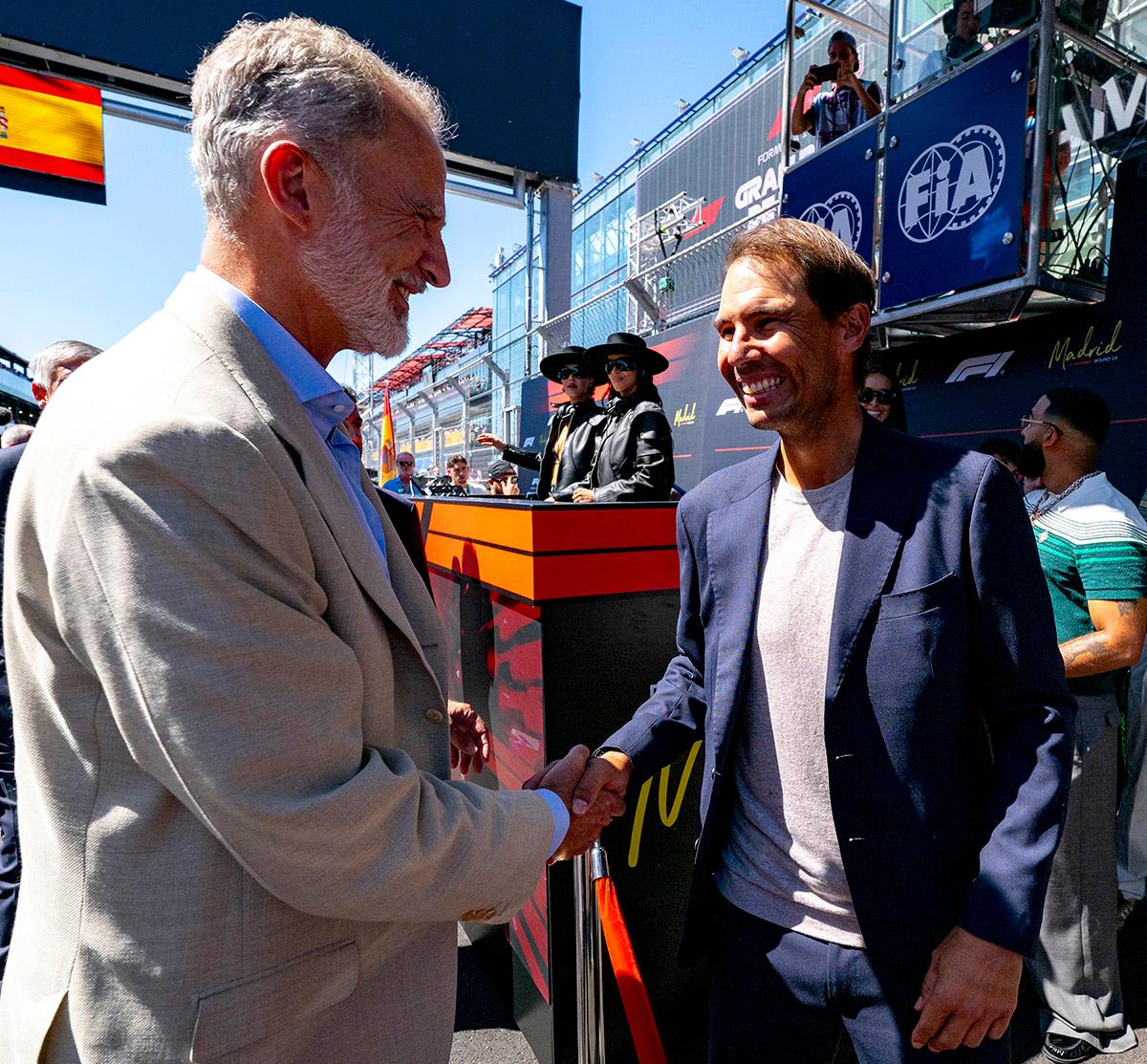
352,618 attendances over four days
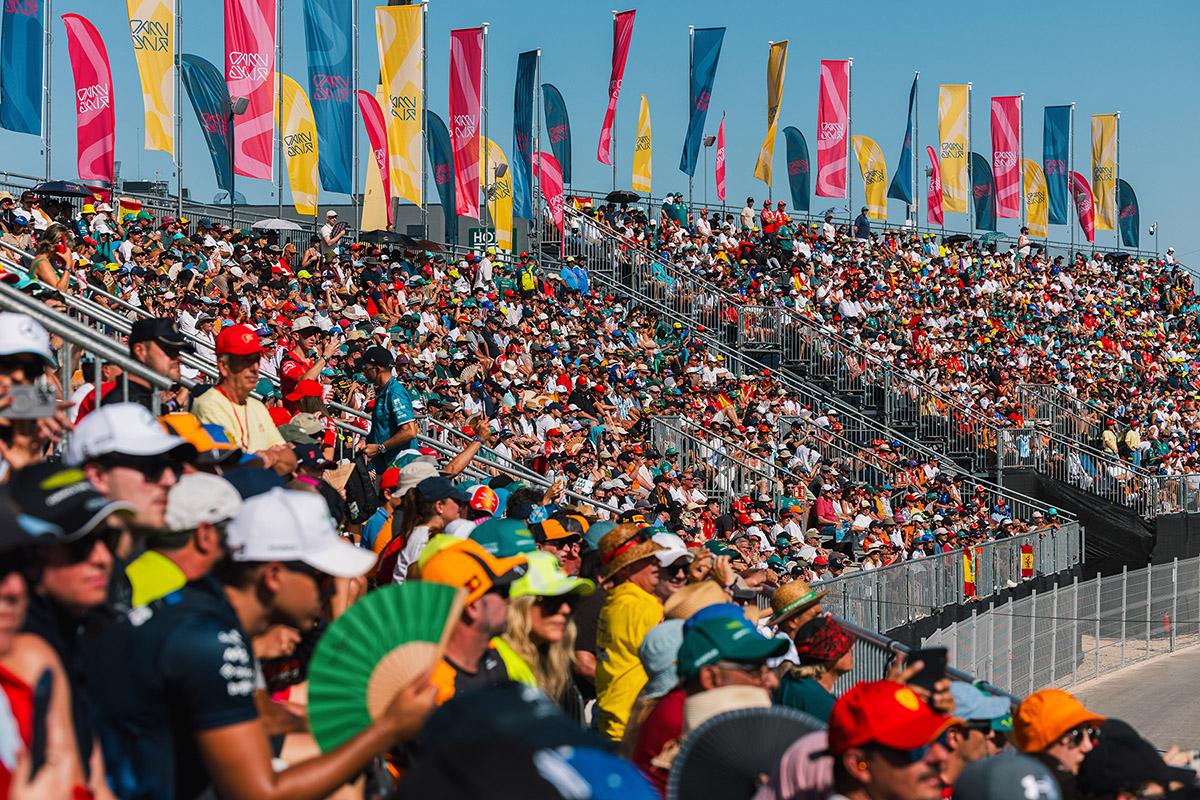
The FORMULA 1 TAG HEUER GRAN PREMIO DE ESPAÑA 2026 closed its first edition with 352,618 cumulative attendances. Attendance grew as the weekend progressed, from 87,890 attendances on Friday to 122,039 on Saturday and 128,183 on Sunday.
The grandstands accounted for 261,766 cumulative entries, and the various VIP area offerings added tens of thousands more, including 38,879 entries to the hospitality areas and 15,000 to the Paddock Club. A volume that reflects the scale achieved by the Grand Prix since its debut.
Public transport takes centre stage in mobility
Moving tens of thousands of people each day was one of the main challenges of a Grand Prix integrated into a major city. The response produced one of the most significant figures of the weekend: eight out of ten fans arrived at MADRING by public transport, very significantly reducing the use of private vehicles. The operation, supported by 14 lines and with peak capacity to move 35,000 people per hour, made it possible to absorb the increase in the public over the course of the weekend without long queues or crowding, even at the exits on Saturday and Sunday, which were the days with the highest attendance. Metro de Madrid carried some 168,000 people to the circuit between 11 and 13 September, almost double the 96,000 initially forecast. Cercanías added a further 107,000 journeys via the C-1 line and Valdebebas station. Together, Metro and Cercanías recorded 275,000 journeys linked to the Grand Prix. The figures support one of the great advantages of MADRING's location: being able to rely on Madrid's transport network to handle an event with more than 350,000 attendances without making the car the main means of access to the circuit.
MADRING enters Formula 1's global conversation
The impact of the debut extended far beyond Spain's borders. Between 7 and 14 September, 288,000 international mentions were recorded, with conversation in markets such as the United States, the United Kingdom, Argentina, Italy, Mexico, the Netherlands, Brazil, Australia and Germany. The United States generated 18,500 mentions; the United Kingdom, 12,600; and Argentina, 11,800. The presence extended across social media, digital communities and international media, with content in titles such as The New York Times. Beyond the volume, the origin of the conversation reflects the debut's ability to place Madrid before audiences from different continents and to enter the international Formula 1 ecosystem from its very first edition. In Spain, a further 33,100 mentions and 77,700 social interactions were recorded. Sporting coverage sat alongside images of the debut and its impact on the city, as well as criticism of the circuit and the political debate generated around the event.
Formula 1 also conquers free-to-air television
The broadcast allowed the Grand Prix's impact to extend far beyond the fans present at MADRING. The race drew 1,551,000 viewers on free-to-air television and achieved a 16.9% share, becoming the leader in its time slot and the most-watched non-news content of the day across all channels. The figure confirms the interest generated by the return of the Spanish Grand Prix to Madrid and its ability to reach a mass audience beyond Formula 1's usual following. That interest also carried over to MADRING's own channels. The website gained 508,000 new users during the period analysed and social media added 45,000 new followers, while the app established itself as one of the main information and wayfinding tools for attendees over the weekend.
The operations behind a GP
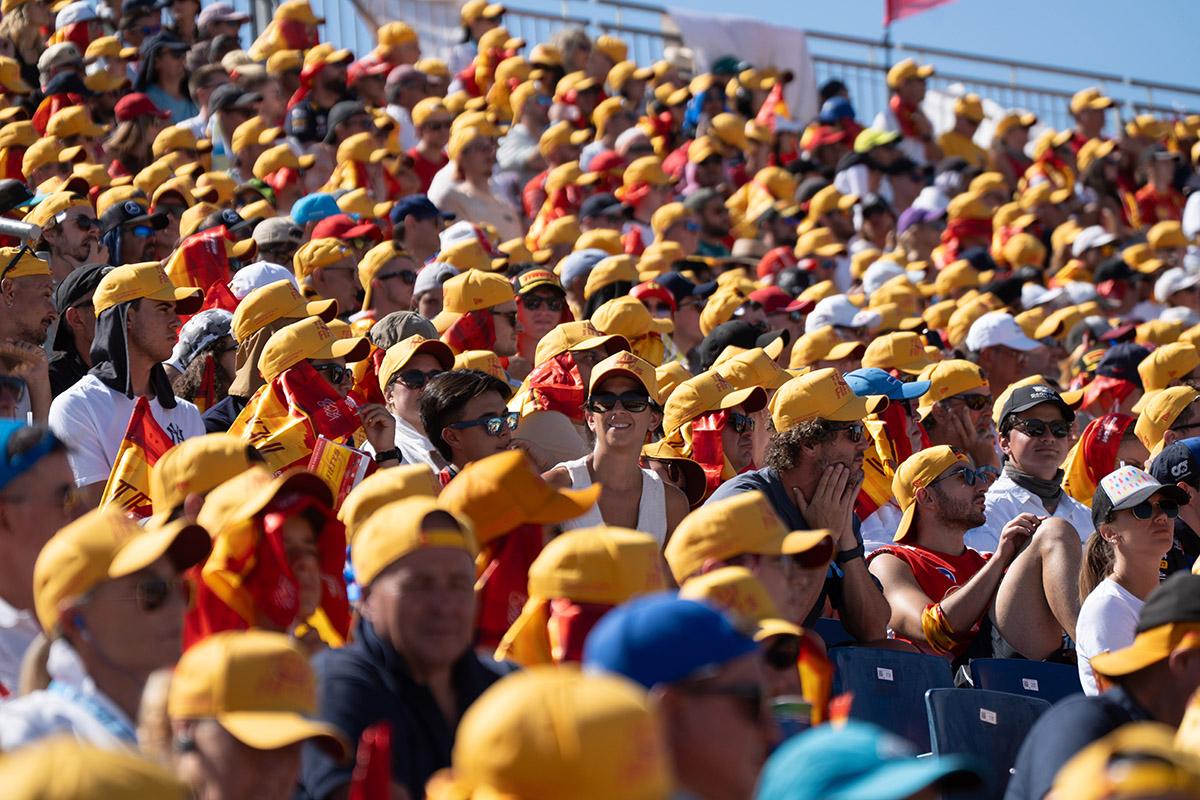
The scale of the Grand Prix was also evident in everything that happened around the competition. MADRING deployed 264 catering points and more than 2,100 waiting staff to serve the public. Among the figures that help to visualise the magnitude of the operation, 120,000 sandwiches, 32,000 portions of Spanish omelette and 250,000 soft drinks and waters were served during the event. After the close, the Grand Prix recovered 9,184 kilos of surplus food for donation, giving a social purpose to the food that had not been consumed during the Grand Prix.
A debut with Madrid as the shop window
The 352,618 attendances, the public transport response, the 288,000 international mentions and the race's leadership on television outline different dimensions of a single debut. MADRING managed to bring together hundreds of thousands of fans, project Madrid internationally and handle the mobility of an event of this scale by relying mainly on public transport. The Spanish Grand Prix passes its debut with flying colours and turns the focus to the changes and improvements planned for the 2027 edition.